


Beyond Rock Bottom: Recovery, Anxiety, and the Power of Movement and Connection

By Melissa Chureau | The Fully Mindful
When we think about addiction recovery, we’re often told a single story: that we need to lose everything—our jobs, our relationships, our health—before we can find the motivation to quit drinking or using. It’s the story of rock bottom. But that story is not only outdated, it’s dangerous. And it leaves far too many people suffering in silence, believing their pain isn’t “bad enough” to warrant change.
Dawn Winalski’s story reminds us there is another way.
In a recent episode of The Fully Mindful, I sat down with Dawn—a lawyer, consultant, yoga teacher, long-distance runner, and person in long-term recovery. Her life has taken her from Arctic Alaska to Portland, Oregon, from contentious courtrooms to trauma-informed yoga studios, from quietly coping with anxiety to openly sharing her path to sobriety.
Her story is layered and real, woven with service, self-discovery, and surprising turns, like teaching yoga in the northernmost city in the U.S., running in sub-zero darkness along the Arctic Ocean, and volunteering with GTD (Go the Distance), a movement-based recovery community. It’s also grounded in something many of us share: a deep desire to feel better, to cope with pain and anxiety, and to find a way forward that feels aligned, whole, and human.
Anxiety and the "Functional" Addict
Dawn grew up around legal conflict—in her case, a contentious custody battle with four lawyers and no one to advocate for her. That experience planted seeds: of advocacy, of anxiety, and also resilience. It also contributed to the shape of her nervous system. Like many people like me who are neurodivergent—especially those with ADHD, C-PTSD, or sensory processing differences—because of Dawn’s childhood experiences, Dawn developed a high tolerance for chaos. And like many of us, she learned early on that alcohol could be a balm, a buffer, a way to feel “normal.”
I relate. For years, alcohol was the thing that smoothed the edges of my own anxiety, my ADHD, and the resulting overthinking and impulsivity. As a graduate of a prestigious university and a law student at that, it never looked like a problem from the outside (unless maybe you happened to be my husband).. But I knew. I felt it. And like Dawn, I realized at some point that the solution had become the problem.
Recovery Without Rock Bottom: The Science of “Grey Area” Drinking
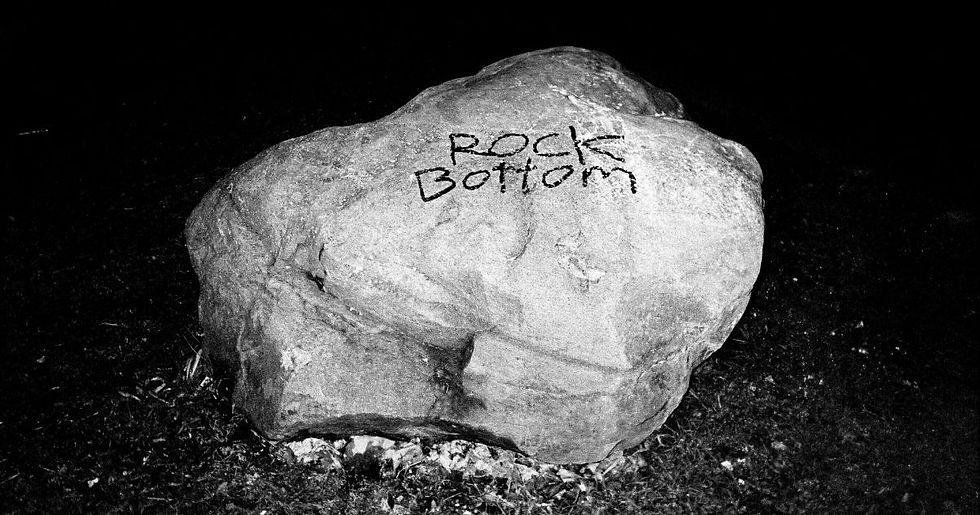
Dawn’s story is an example of what psychologists and addiction specialists now call “grey area drinking”—a pattern of alcohol use that doesn’t fit traditional definitions of alcoholism but still negatively impacts mental, physical, or emotional well-being.
Research has shown that people don’t need to meet clinical thresholds to benefit from changing their relationship with alcohol. In fact, the concept of "alcohol use disorder" (AUD) exists on a spectrum, and many people benefit from support and recovery practices before the consequences become severe.
Brain imaging studies show that even moderate drinking can alter brain connectivity and executive function—especially in neurodivergent individuals whose nervous systems are already working overtime to process and regulate information.
And importantly, the brain is resilient. Neuroplasticity—the brain’s ability to rewire and adapt—means that healing is always possible. But recovery doesn’t have to begin in crisis. It can begin with curiosity. With one day sober. With a quiet knowing that something needs to change.
Movement as Medicine: Yoga, Running, and Somatic Recovery
One of the most beautiful threads in Dawn’s journey is how movement has become a go-to medicine. Whether it was running on icy Arctic roads, teaching trauma-informed yoga at a tribal college, or showing up for weekly GTD community runs, she has discovered what so many in recovery eventually learn:
“The body keeps the score,” but it also holds the key to healing.
(quote from Bessel van der Kolk)
Incorporating somatic practices—like yoga, conscious connected breathwork, running, or simply mindful walking—can regulate the nervous system, reduce cravings (for alcohol or other substances, food, dopamine-seeking behaviors), and help rewire patterns that have been locked in place for years. Studies have shown that aerobic exercise boosts dopamine, improves mood, and can reduce relapse rates in early recovery. See, e.g., this Frontiers in Psychiatry review.
Movement also reconnects us to ourselves. As Dawn shared in the episode, sometimes the biggest lesson is that we don’t have to push through everything. Sometimes quitting the hard thing—whether it’s a job, a pattern, or a coping mechanism—is the most compassionate thing we can do.
Finding Support—Before You Think You “Deserve” or Need It

You don’t have to do this alone.
Whether you’re sober curious, a grey area drinker, or someone deep in struggle, there are so many ways to begin. And you don’t need to hit bottom first. You don’t need to prove your pain. You only need a willingness to explore another path.
Here are a few communities and tools that Dawn and I have both found helpful (and, of course, there is always 12-step, which saved my life):
She Recovers: A welcoming, trauma-informed space for women and non-binary folks recovering from anything—alcohol, trauma, burnout, or just life. sheRecovers.org
GTD (Go the Distance): A Portland-based, movement-based recovery community that supports people in treatment and long-term recovery through running and walking. gothedistance.org
Quit Lit: Books like We Are the Luckiest by Laura McKowen or This Naked Mind by Annie Grace offer powerful mindset shifts and real talk for sober-curious folks.
Mindfulness & Breathwork: Practices that help build awareness, presence, and nervous system regulation. (I offer these through The Fully Mindful.)
Therapy & Coaching: Especially trauma-informed or somatic practitioners who can guide you in healing from the root.
You Are Already Worthy of Support
One of the most powerful things Dawn said in our conversation was this:
“I always knew I could do hard things. But I didn’t always know I could quit hard things—or that quitting could be an act of self-compassion.”
Powerful, right?
Because if you’ve been raised to push through, to white-knuckle your way to success, to be the strong one, then quitting might feel like failure. But in recovery, quitting isn’t giving up. It’s coming home. It’s making space. It’s starting again, not from rock bottom, but from wherever you are, right now.
And you don’t have to walk—or run—it alone.
Want to hear the full conversation?
🎧 Listen to the episode: From the Arctic to Advocacy: Law, Sobriety & Movement with Dawn Winalski on The Fully Mindful.


Comments